 Glass Machinery Factory
Glass Machinery Factory
Glass Machinery Factory
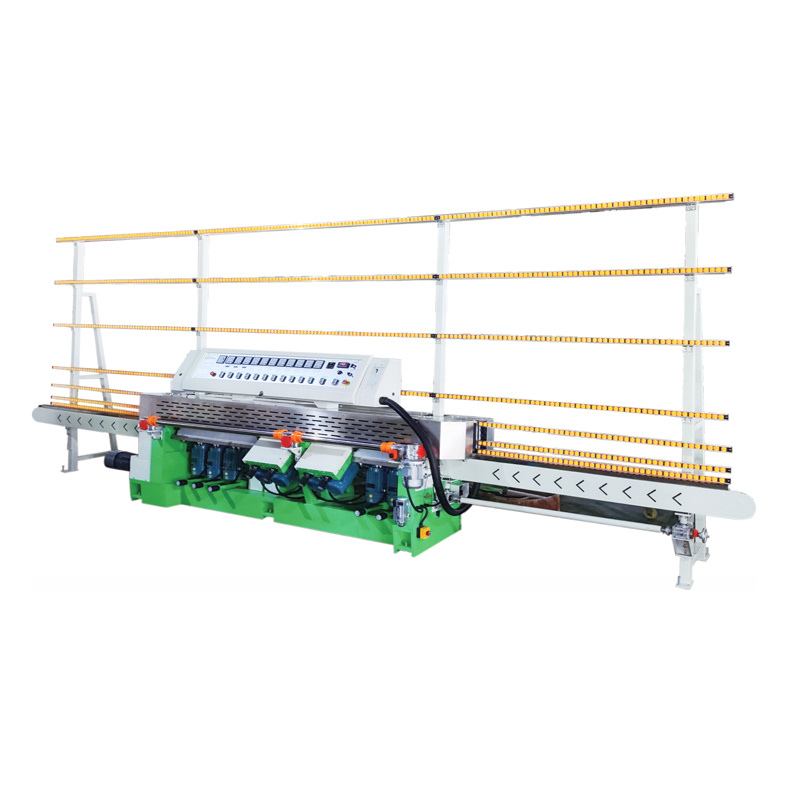
1. Current Status of Core Equipment Applications in Glass Deep Processing in 2026: Automation and Precision With the continuous rise in labor costs and increasing demands for global supply chain efficiency, the Chinese glass processing landscape in 2026 exhibits a distinct "de-laborization" characteristic. Automated inline production for glass cutting, edge grinding, and sandblasting processes in the architectural, furniture, and photovoltaic sectors has become the mainstream. This full-process automation not only effectively alleviates the pressure of rising labor costs but also significantly improves the production takt time through seamless connection between processes. In terms of precision processes, the deep integration of CNC glass processing equipment with smart sheet loading, double-sided lamination, and other equipment has become key to enhancing overall production capacity. The strict requirements for processing precision and surface quality in photovoltaic glass and high-end furniture markets are driving equipment evolution towards high precision and high stability. Manufacturing enterprises no longer merely satisfy with the performance of individual units but focus on the collaborative capability of the entire line, ensuring that every step from cutting to grinding to deep processing achieves micron-level precision control. 2. Wastewater Treatment and Green Manufacturing Upgrades Driven by Environmental Compliance Environmental compliance has shifted from an "optional item" to the "survival baseline" for glass production enterprises. In 2026, demand for wastewater treatment equipment for glass edge grinding, ink, and deep processing wastewater has surged. Enterprises are accelerating the deployment of wastewater recycling systems that comply with Chinese environmental product certifications and the EU Machinery Directive to meet increasingly strict emission standards. 2.1 Shifting from End-of-Pipe Treatment to Process Control The traditional end-of-pipe treatment model is gradually being replaced by process control. The high self-sufficiency rate of glass machinery parts has become a critical factor in enhancing the long-term operational stability of wastewater treatment systems. When core components are controlled by equipment manufacturers, system compatibility and durability are significantly improved, reducing the risk of secondary pollution caused by poor part compatibility. Adhering to the design philosophy of "balancing function and practicality, integrating environmental protection with manufacturing" has become the core metric for selecting new-generation glass machinery, aiming to achieve compliant wastewater discharge and efficient resource recovery. 3. Technical Evolution Trends: Intelligent Full Lines and Full Lifecycle Management The direction of technological evolution is upgrading from single-function machines to intelligent full-line solutions. Future glass production lines emphasize coordination between processes and data interoperability, utilizing the Industrial Internet to achieve real-time collection and analysis of production data. Focusing on the long-term stability of equipment and optimizing the user experience are essential means for manufacturing enterprises to reduce downtime rates and improve operator comfort. Brands capable of providing full lifecycle management services can offer customers one-stop support from installation and commissioning to post-service maintenance, thereby gaining greater market favor. By improving the self-sufficiency rate of parts and the quality of core components, enterprises can effectively reduce the long-term operation and maintenance costs of equipment. This model not only ensures minimal performance degradation over the equipment's years of use but also truly achieves the goals of efficient, environmentally friendly, and practical production, avoiding the trap of incurring high future maintenance costs due to the initial purchase of low-priced equipment. 4. Procurement Decision Guide: Evaluating the Long-Term Value of Glass Machinery Equipment When facing numerous suppliers of glass machinery equipment, manufacturing enterprises need to establish an evaluation system based on real production problems. Balance short-term capacity with long-term compliance costs: When selecting equipment, one should not only look at the initial purchase price but also calculate energy consumption, water usage, and maintenance costs over the entire lifecycle of the equipment. Prioritize manufacturers with authoritative certifications (such as ISO systems, environmental certifications) to ensure long-term compliance without concerns. Focus on efficiency improvement and operational convenience: Verify the efficiency improvement of the equipment in actual production, rather than just focusing on laboratory data. Avoid blindly pursuing short-term conceptual technologies; instead, choose products that solve actual pain points, have clear operational logic, and have a low failure rate. Establish a pragmatic evaluation system: Examine the supplier's ability to self-supply parts and their speed of service response. Ensure that the equipment investment can solve core issues such as cutting precision and environmental emissions, and create continuous operational value, moving towards long-term mutual benefit with the enterprise.

1. Introduction: Industry Transformations Driven by Dual Forces In 2024, the glass machinery market trends exhibit a distinct dual focus on "efficiency" and "sustainability." For global manufacturing enterprises, the continuous rise in labor costs and increasingly stringent environmental compliance pressures constitute the two core pain points in current production management. In the past, automation and environmental technologies were often viewed as optional capital expenditures. Today, they are no longer optional; they are the core engines reshaping production lines and ensuring sustained competitiveness. From the perspective of manufacturing enterprises, procurement decision-making logic is undergoing a profound shift. Companies are no longer simply purchasing standalone machines; instead, they are seeking integrated solutions that simultaneously address "efficiency improvement" and "environmental compliance." This shift requires equipment suppliers to possess not only strong mechanical manufacturing capabilities but also a deep understanding of the entire production process, providing practical, reliable glass machinery equipped with long-term value support. 2. Automation Upgrades: From Standalone Units to Intelligent Line Collaboration With changes in the labor structure, automation technology is evolving from an auxiliary tool to the master of the production line. The combination of CNC control and visual inspection technologies has greatly enhanced the precision and consistency of glass processing, making micron-level errors a thing of the past. The widespread application of automatic loading and unloading systems has significantly reduced reliance on highly skilled labor while substantially increasing the production line takt time, enabling efficient round-the-clock operation. Furthermore, the trend toward modular design is becoming increasingly apparent. Different industries such as construction, furniture, home appliances, and solar power have vastly different requirements for glass specifications. Modular glass machinery can support rapid changeover production, helping enterprises flexibly switch between multi-scenario orders and maximize equipment utilization. This flexibility is the key to meeting diverse market demands. 3. Environmental Compliance: Wastewater Treatment Becomes a Standard Production Line Component Tightening of industrial emission standards across major global economies has led to a surge in demand for wastewater treatment in deep glass processing. Wastewater generated during processes such as edge grinding, cleaning, and ink production, which contains silica powder, oil stains, and chemical reagents, poses significant compliance risks if improperly treated. Consequently, integrated environmental protection equipment solutions are becoming the standard for new or retrofitted production lines. The path of technological evolution is extending from a singular focus on "end-of-pipe treatment" to "source water conservation." Efficient filtration systems and water recycling technologies not only reduce the consumption of fresh water resources but also lower enterprise water treatment costs. Meanwhile, the value of solid waste recovery and industrial water purification systems in ESG supply chains is increasingly prominent, helping glass enterprises meet the assessment criteria of major downstream clients for green suppliers, thereby gaining an advantage in bidding processes. 4. Energy Efficiency Innovation and Low-Carbon Technology In response to ESG supply chain requirements, the concept of low-carbon manufacturing is reshaping the design standards for glass machinery. Technical innovations in low-energy drive systems, such as the application of high-efficiency servo motors, have significantly reduced the long-term electricity costs of equipment operation. For production lines operating continuously for 24 hours, even minor improvements in energy efficiency can yield considerable positive impacts on annual financial reports. Water-saving cleaning equipment is another important innovation addressing global water resource scarcity pressures. By optimizing spray structures and recovery systems, water usage for cleaning can be reduced by more than 30%. These technological innovations are not only about environmental responsibility but are also directly related to the operating cost structure of enterprises, helping glass manufacturers better meet customers' green procurement standards and enhance market competitiveness. 5. Digital Connectivity: IoT Empowers Full Lifecycle Equipment Management The Internet of Things (IoT) technology is endowing glass machinery with the ability to "sense" and "think." Remote monitoring and predictive maintenance functions, enabled by real-time data interconnection, can predict potential failures in advance, significantly reducing losses caused by unplanned downtime. For enterprises with multi-plant operations, this transparent management approach means better resource allocation. Improving OEE (Overall Equipment Effectiveness) has become a core goal of digital transformation. Using digital tools to optimize production scheduling ensures stable equipment operation under high loads while reducing changeover time. In actual cases, glass machinery equipped with IoT features has helped enterprises transitioning to smart factories achieve a 20% reduction in downtime and a 15% decrease in maintenance costs, demonstrating the high return on investment of technology. 6. Glassful Practice: Empowering Productivity with Professionalism, Practicality, and Environmental Protection In the process of gaining insights into these trends, Zhongshan Glassful Glass Machinery Co., Ltd. provides a highly valuable practical sample with its 26-year accumulation in glass machinery equipment manufacturing. Glassful was established in 2014, but its team and technical foundation stem from a long-term focus on the industry. Located in Zhongshan, Guangdong Province, China, the company owns an industrial plant of over 2,000 square meters and has achieved a self-sufficiency rate of 85% for glass machinery components. This high self-sufficiency rate ensures quality control of core components and rapid supply chain response, safeguarding equipment stability and durability from the source. Glassful adheres to a product philosophy of "balancing function and practicality, and integrating environmental protection with manufacturing." It does not chase short-term concepts but only solves real production problems, which is its consistent brand tone. From horizontal automatic sandblasting machines to complex glass cutting production lines, and further to glass edge grinding wastewater treatment systems, the full-chain support provided by Glassful aims to help global glass manufacturing enterprises achieve efficient and environmentally friendly transformation and upgrades. Its obtained China Environmental Protection Product Certification and Machinery Directive Conformity Declaration serve as strong endorsements of its technical strength and international compliance capabilities. 7. Conclusion: Choosing Long-Term Partners for a Green and Efficient Future In summary, automation, environmental protection, and digitalization are irreversible development directions in glass machinery market trends. For manufacturing enterprises, when evaluating existing production lines and planning upgrade paths, they should focus on the total lifecycle cost of equipment, environmental compliance, and suppliers' long-term service commitments. Selecting a partner who understands both technology and business, and who values both efficiency and environmental protection, is crucial. Glassful upholds the values of "professionalism, practicality, environmental protection, and win-win cooperation," and is committed to becoming a trusted glass machinery partner for global glass production enterprises. On the journey toward a green and efficient future, practical technological innovation and reliable service support will be the solid cornerstone for enterprises to navigate cycles and win the market.
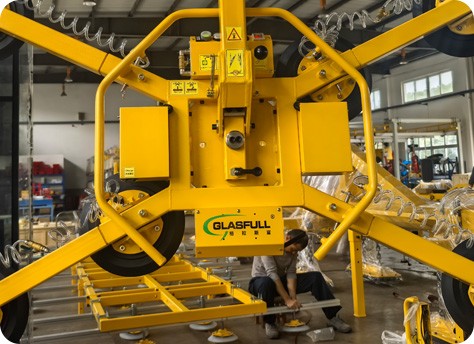
磨边污水处理系统实现泥水分离循环利用,帮助多家玻璃企业达成污水零排放目标,兼顾环保与成本
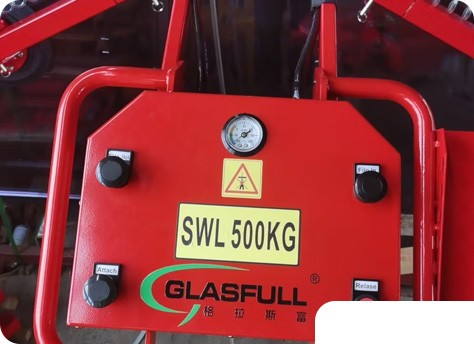
定期检查磨轮磨损与水路循环状态,是保持磨边精度、延长设备使用寿命的关键,日常点检表已随机附带
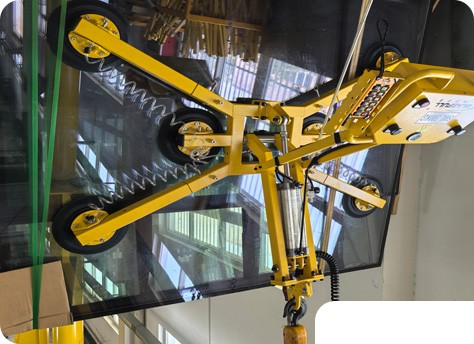
为破解机械硬件与工业软件协同的技术难题,企业早年间便组建专属研发团队,针对行业特性自主开发MES生产执行系统,依托自研算法实现订单自动排产